Context
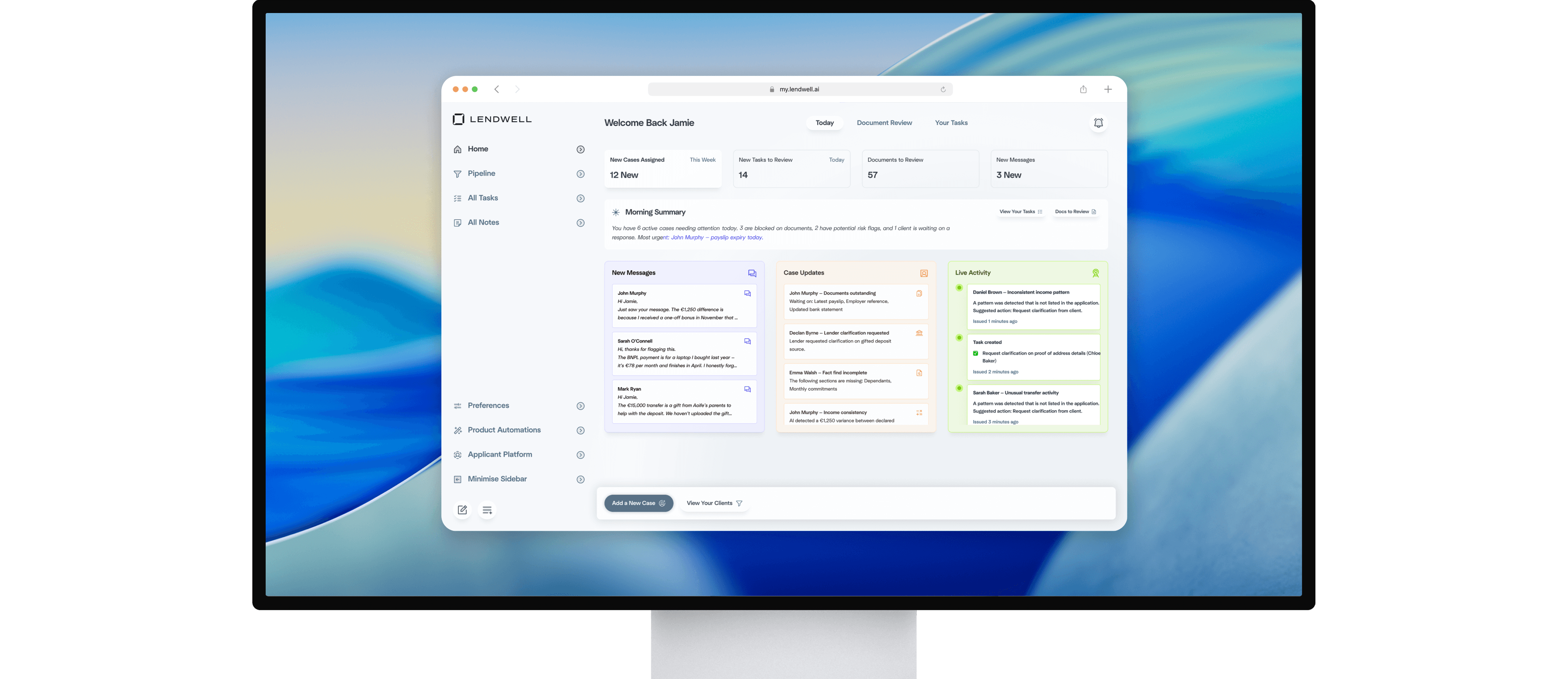
LendWell is a B2B fintech building the operating system for mortgage advisers. When I joined, the company was early-stage, founder-led, and moving fast under real regulatory pressure. Product-market fit was still forming, customers were live or about to go live, and the platform was already carrying operational and compliance risk.
I joined as Head of Design, took a short foray into Product as Head of Product and then took the CDO role once we were in a position to expand.
When I joined here was no product, let alone a design function. No shared product language, and no consistent decision-making framework across Product, Engineering, Commercial, and Data Science. Design was implicitly expected to “make things look good” while also unblocking delivery, customer trust, and regulatory confidence.
Designing clarity into a high-risk, ambiguous domain
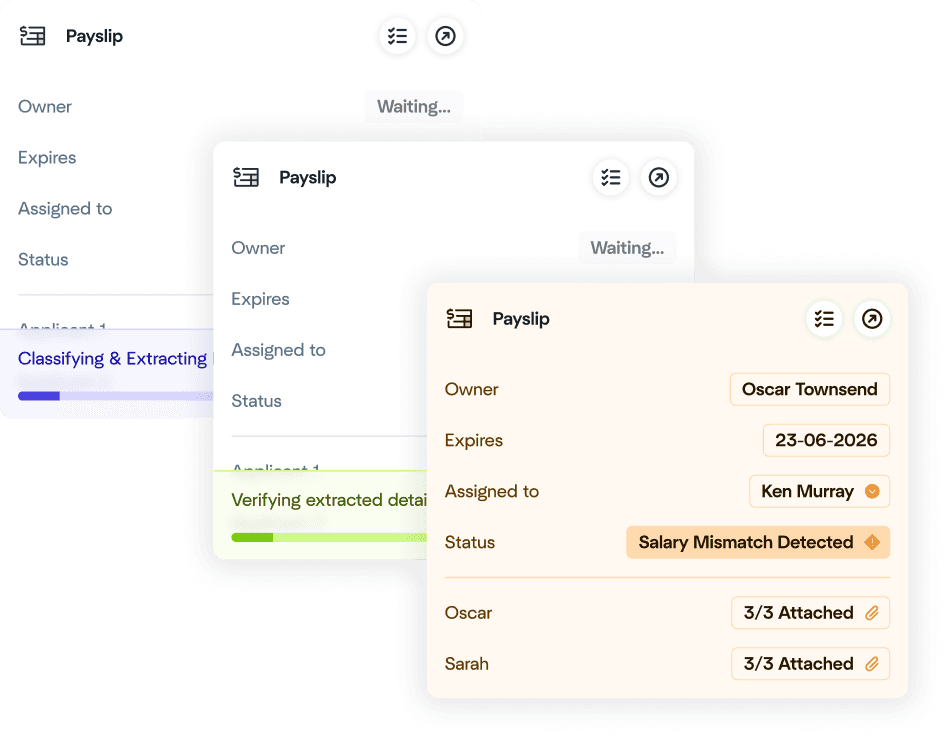
Mortgage origination is defined by uncertainty. Information arrives piecemeal, requirements vary by lender, and advisers are constantly making judgment calls under regulatory pressure. Early versions of the product reflected this reality too literally — screens mirrored backend data structures, uncertainty was hidden or implicit, and users were left to infer what the system knew, what it didn’t, and what action was required.
My first challenge was to redesign the product around human decision-making rather than data completeness. This meant making ambiguity visible, reducing cognitive load, and helping advisers move forward confidently without over-automation or false certainty. The goal was not to eliminate complexity, but to contain it.
Building a design function while shipping under live pressure
There was no design system, no research practice, and no shared UX standards — yet customers were live and deadlines were real. The company could not pause to “set things up properly.”
The challenge was to build foundations incrementally, in parallel with delivery. Every piece of process, every artefact, and every design decision had to justify its existence by making the team faster, clearer, or safer. Design needed to be practical, embedded, and trusted from day one.
Aligning leadership around decisions rather than opinions
Product discussions were frequently slowed by blurred ownership and consensus‑seeking. Design risked becoming a mediator rather than a driver, absorbing tension without resolving it.
A critical part of opening the role was establishing clarity around who decides what, how input is gathered, and when debate is closed. Without this, no amount of design quality would survive contact with delivery pressure.
My Approach
I framed design internally as a risk‑reduction function. Design existed to reduce operational risk for advisers, regulatory risk for the business, delivery risk for engineering, and decision risk for leadership. This reframing shifted how design conversations were held. Reviews became about failure modes, not preferences. UX decisions were tied directly to real‑world consequences observed in adviser workflows.
This framing changed how design was received internally. Design reviews became risk reviews. UX decisions were tied directly to failure modes observed in real adviser workflows.
Discovery was deep, direct, and sometimes uncomfortable. I spent significant time with advisers, completions teams, and operational staff, focusing less on feature requests and more on where mistakes happen, where confidence breaks down, and where existing tools actively create risk. These insights shaped not just UI decisions, but roadmap priorities and pilot scopes of work.
Rather than designing isolated screens, I focused on systems. Information hierarchy, explicit states, reusable patterns, and consistent interaction models became the backbone of the platform. This allowed the product to scale in complexity without becoming fragile or incoherent.
This allowed the team to ship faster and safer as the platform expanded across new workflows.
In parallel, I worked with leadership to embed design into product governance. Ownership boundaries were clarified, collaboration points were made explicit, and design was positioned where decisions were actually being made — not downstream as a service function.
This reduced friction, avoided re-litigation of decisions, and let design operate with appropriate authority.
Key Initiatives & Outcomes
The adviser experience was restructured around how advisers actually think and work, rather than how data is stored. Uncertainty was surfaced explicitly, next actions were clearer, and the platform became something advisers could trust rather than double‑check.
Early customers and pilots were supported by deliberate guardrails. Compliance‑sensitive moments were made visible, silent failure modes were removed, and operational anxiety during live usage was reduced.
A modular design system enabled engineers to ship consistent interfaces independently, reducing review overhead and improving delivery speed without sacrificing quality. As the platform expanded into new workflows, consistency held.
Product discussions shifted from circular debate to outcome‑focused decision‑making. By anchoring conversations in user risk and operational impact, the team moved faster with greater confidence.
Leadership Impact
As Chief Design Officer, my responsibility extended beyond product output. I mentored designers and non‑designers in product design thinking.
I acted as a bridge between commercial reality and user reality, and protected long‑term product integrity under short‑term pressure.
I operated as a peer to Product, Engineering, and Commercial leadership, ensuring design had appropriate authority and accountability at the table.
How AI has changed how I design
Working with Founders
I work best with founders when there is clarity on intent and mutual respect for judgment. My role is not to decorate decisions after the fact, nor to block progress with process, but to help founders see the consequences of choices early — before they become expensive or irreversible.
At LendWell, this meant being deeply embedded in strategic conversations while remaining independent enough to challenge assumptions. I focused on translating founder vision into coherent systems, pressure‑testing ideas through prototypes, and ensuring that speed did not come at the cost of trust or credibility.
I value direct communication, early disagreement, and clear decision rights. When alignment is reached, I move quickly and expect the same from others. When alignment is not possible, I surface the trade‑offs explicitly so decisions are made consciously rather than by drift.
This approach builds trust over time. Founders know that when design supports a direction, it has been examined from user, delivery, and risk perspectives — and that when design pushes back, it is in service of the long‑term integrity of the product and the business.
Reflection
This role reinforced that senior design leadership is fundamentally about judgment. It is about knowing when to say no early, when to make uncertainty explicit, and how to design for failure as much as success.
At LendWell, my work was about creating conditions where teams could move fast without breaking trust — with users, with customers, and with each other. That is the standard I hold for design leadership at this level.
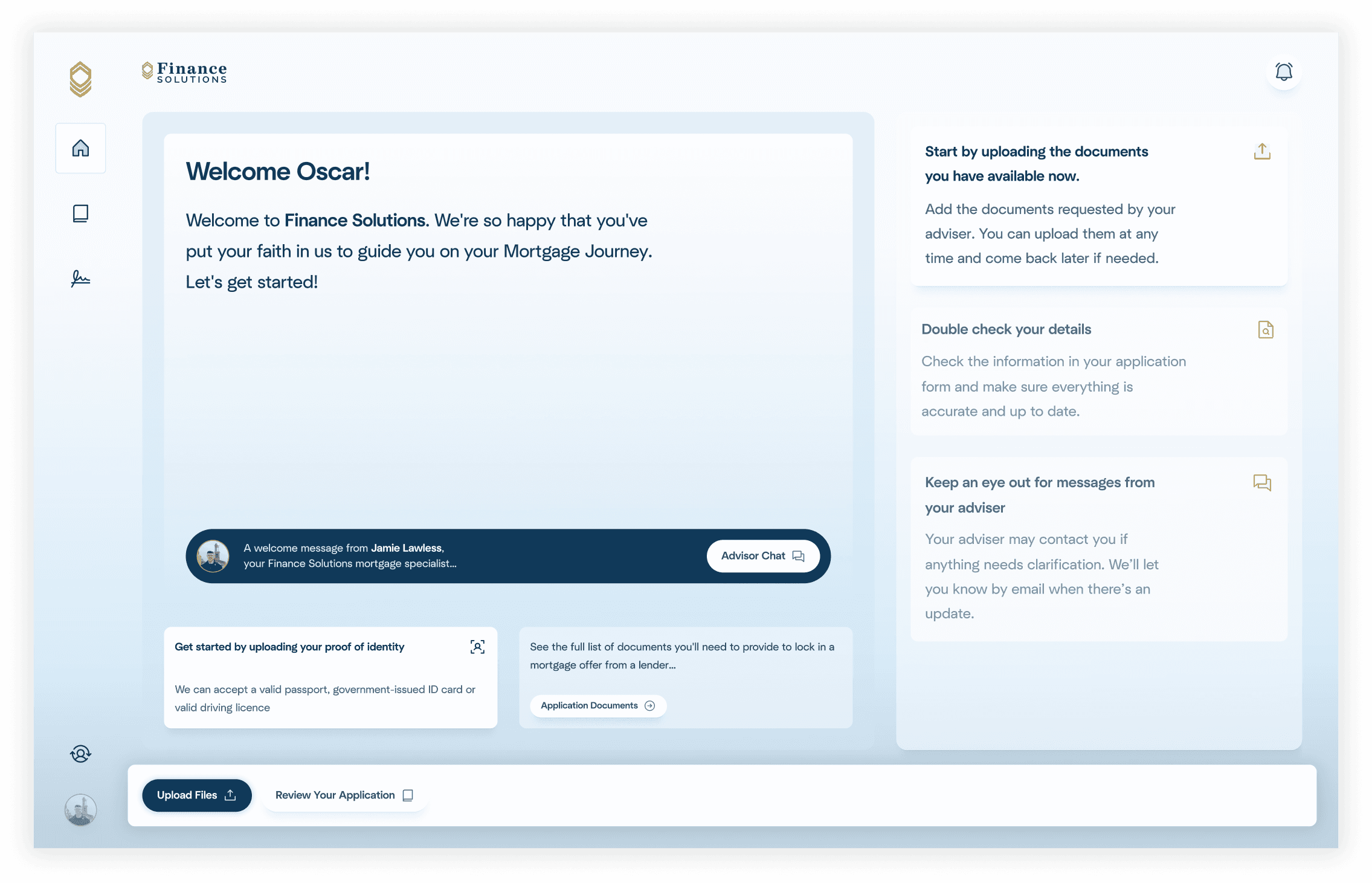
80%
Average reduction in time advisers spend reviewing applications before lender submission using LendWell. Compared to our closest competitors.
123
The LendWell platform went from idea to signing the largest intermediary in the country in 2 years.